

Top 10 Ideogram AI Image Prompts for Men’s Stylized Typography and Creative Visuals
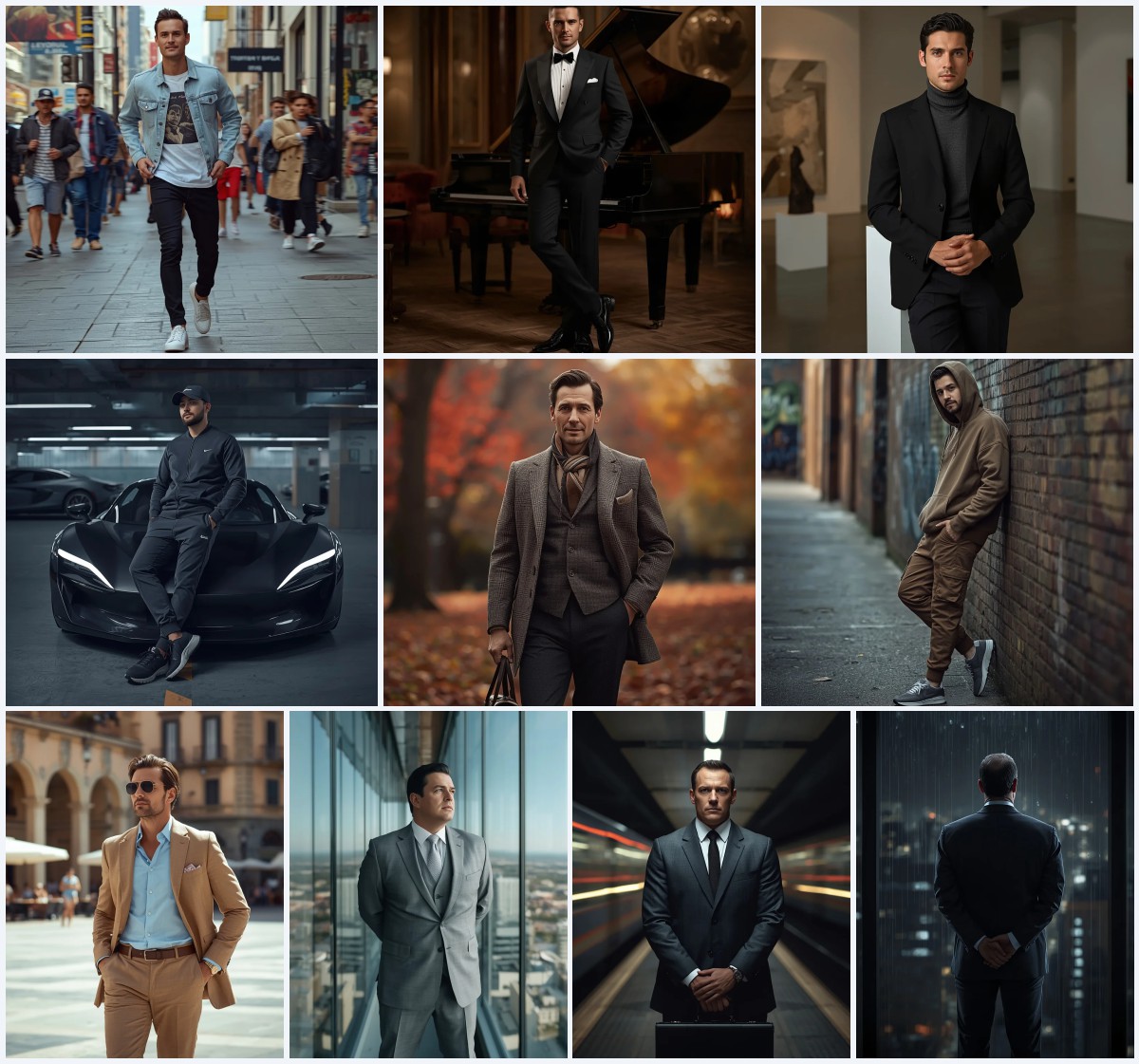
This collection gathers ten men's portrait and fashion prompts built around tailored formalwear, moody interiors, and clean studio setups. The shared thread is a confident male subject rendered with cinematic light and photorealistic skin, whether he stands in a ballroom lobby or walks a misty street.
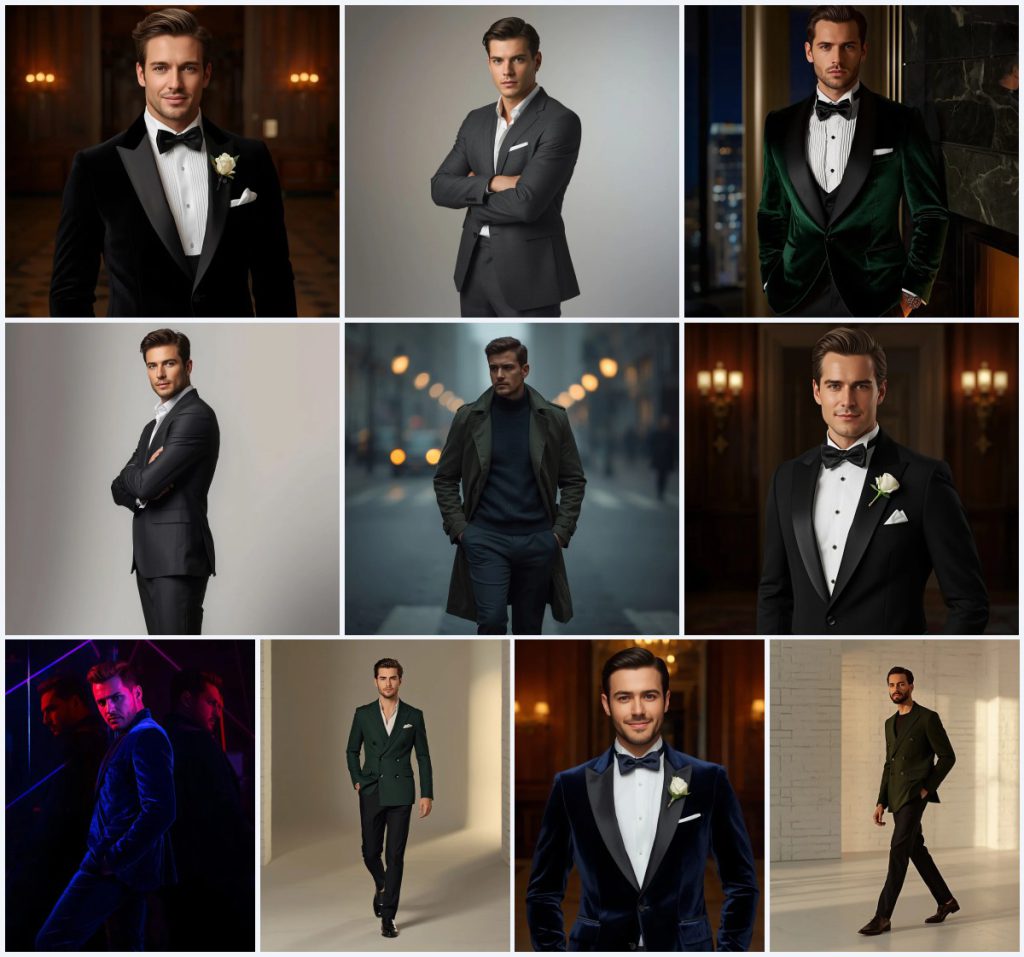
The set includes titles such as Handsome Male In Classic Black Blazer Silk Bowtie, Sleek Tailored Charcoal Suit Male Studio Pose, Handsome Male In Modern Emerald Velvet Tuxedo Jacket, Stylish Man In Modern Olive Green Trenchcoat, Handsome Male In Classic Black Tuxedo White Rose, Retro Futuristic Velvet Suit Under Prism Lights, Stylish Man In Retro Forest Green blazer, and Handsome Male In Classic Navy Blue Blazer Bowtie. Below is how to read, run, and refine them.
What this men's portrait prompt collection is asking for
Across the set, the prompts ask for one well-dressed man placed in a specific room or street, lit with warm or high-contrast light, and rendered with realistic skin and fabric. Some poses are static portraits, some are full-body walking or leaning shots, and a few push into neon-lit editorial territory. The wording stays consistent about tailoring, expression, and lens choice, so the outputs should feel like one cohesive menswear shoot rather than ten unrelated pictures.
- A tailored jacket: black velvet blazer, charcoal grey suit, emerald green velvet tuxedo, olive green trenchcoat, navy blue velvet blazer, or forest green double-breasted blazer.
- A crisp white shirt with a silk bowtie or pleated front in the formal portraits.
- A delicate white rose boutonniere pinned on the lapel in the ballroom lobby variations.
- Interior and street settings: a grand dimly lit ballroom lobby, a luxury penthouse lounge with a dark marble fireplace, a clean white studio, a misty city street, and a modern gallery with white brick walls.
- Lighting language such as warm golden wall sconces, fireplace glow, soft warm grey gradient, prism lights, and cinematic high-contrast lighting.
- Camera notes like 85mm lens, f1.8, 8k, photorealistic skin texture, and shallow depth of field.
The scene each prompt builds
The ballroom prompts place the man in a formal, historic space. The text describes "a grand, dimly lit ballroom lobby with historic wooden panels and warm golden wall sconces in the background," and the subject is "looking directly at the camera with a calm, confident, and warm expression." That combination of old wood, warm sconce light, and direct eye contact gives the portrait a timeless, slightly ceremonial feel.
The other prompts shift the environment without losing that composure. One puts the man "leaning against a dark marble fireplace" with "floor-to-ceiling windows show a soft bokeh of city skyscraper lights." Another places him "walking confidently down a misty city street" with "street lights in the background are softly blurred by a shallow depth of field." A third uses "a clean white studio with a soft warm grey gradient and delicate shadows," while the neon version leans into "multi-colored prism lights slice across his silhouette."
Why these men's fashion prompts work
These prompts work because they separate the subject, the wardrobe, and the environment into clear clauses, which gives the model fewer chances to improvise. The result is a picture that reads as a real editorial portrait rather than a generic AI face.
- The wardrobe is specific enough to render convincingly: velvet, satin lapels, pleated shirt fronts, and bowties all have distinct textures that show up in the final image.
- The lighting is named rather than implied, so the model knows whether to produce warm sconce glow, fireplace warmth, studio gradient, or neon prism reflections.
- The lens and aperture notes, such as 85mm and f1.8, push the output toward portrait-photography depth of field instead of a flat, over-sharpened look.
Three styles inside this collection
The collection holds three distinct looks, and each one stays inside the wording of its own prompt. Pick the style that matches the card you are running rather than mixing them.
The first is classic ballroom elegance, the second is clean studio menswear, and the third is cinematic street and neon editorial.
- Classic ballroom elegance: Warm golden wall sconces, historic wooden panels, a velvet blazer or tuxedo, and a white rose boutonniere create a formal, timeless portrait.
- Clean studio menswear: A white studio with a soft warm grey gradient, a tailored charcoal suit, crossed arms, and 85mm f1.8 rendering keep the frame minimal and sharp.
- Cinematic street and neon editorial: A misty city street with blurred lights, or a glossy black reflective wall with prism lights and neon red and purple reflections, gives a moody, high-impact look.
How to run these prompts step by step
Work through the set one card at a time so you can judge each result on its own terms. The steps below apply to any of the ten prompts in the collection.
- Copy the prompt. Take the full text of the card you want, including the wardrobe, setting, lighting, and lens notes, and paste it into your image tool without trimming the ending.
- Upload a reference. If you have a photo of the outfit, the room, or the pose you want, upload it as a reference so the model has a visual anchor for fabric and lighting.
- Generate the first pass. Run the prompt at your chosen aspect ratio and review the whole frame before zooming in on details.
- Check hands and face. Look at fingers, ears, jawline, and eye direction, since portraits with direct eye contact and crossed arms are where these usually break first.
- Check the main object. Inspect the jacket, bowtie, boutonniere, and lapel line, because velvet, satin, and small pinned flowers are the details most likely to smear.
- Refine and rerun. Adjust one clause at a time, such as the lighting or the background, and rerun rather than rewriting the entire prompt.
Choosing a reference photo
A reference photo helps most when it matches the prompt's mood rather than its exact content. You are giving the model a lighting and posture cue, not a template to trace.
- Pick a photo with clear, even light on the face so the model can read skin texture and jawline without fighting heavy shadows.
- Choose a shot where the outfit silhouette is visible, especially the shoulders and lapel line, since tailoring is central to every prompt in this set.
- Avoid busy backgrounds in the reference, because the prompts already name a specific setting and a cluttered reference can pull the output away from it.
Tools that handle these prompts well
Different tools respond differently to long, descriptive portrait prompts. The table below compares how each one tends to behave on this collection.
| Tool | Access | Typical realism | Useful here for |
|---|---|---|---|
| ChatGPT | Web and app, paid tiers for image generation | Good to very good, strong at following structured descriptions | Rewriting a card like Handsome Male In Modern Emerald Velvet Tuxedo Jacket into a shorter prompt while keeping the marble fireplace and city bokeh. |
| Google Gemini | Web and app, free and paid tiers | Good, improves with detailed scene text | Testing the ballroom lobby wording with historic wooden panels and warm golden wall sconces to see how it handles a dim interior. |
| Leonardo AI | Web, free credits with paid plans | High, especially with portrait and cinematic presets | Running the neon version with multi-colored prism lights and glossy black reflective wall for sharp red and purple reflections. |
| Midjourney | Discord and web, paid subscription | Very high, strong fabric and lighting rendering | Rendering velvet and satin textures in the tuxedo and blazer cards, where the plush surface and lapel sheen matter most. |
Tips for better results
Small wording changes go a long way with these prompts. The three tips below focus on the details that most often decide whether the image looks photographed or generated.
- Keep the lens and aperture notes intact, because 85mm and f1.8 are what produce the soft background separation behind the velvet blazer and the fireplace glow.
- Describe the fabric explicitly when you rerun, since velvet, satin lapels, and a pleated shirt front each catch light differently and the model needs that cue.
- Protect the small props, such as the silk bowtie and the delicate white rose boutonniere, by naming them again if they vanish or merge into the lapel.
Common issues and how to fix them
Most failures in this set come from texture, hands, and background clutter rather than from the overall composition. The table lists the usual problems and the clause to adjust.
| Issue | What to change |
|---|---|
| Velvet or satin looks flat and plastic | Add or strengthen the fabric wording, such as the rich plush texture of the velvet jacket, and keep the warm light source named. |
| Hands look wrong in crossed-arm or pocket poses | Simplify the pose clause, or ask for one hand casually in his pocket instead of both arms crossed. |
| Background becomes busy and steals attention | Reduce the background detail and reinforce the shallow depth of field and bokeh wording already in the prompt. |
| Face drifts away from the calm, confident expression | Restate the expression clause and the direct eye contact, then rerun before changing anything else. |
Frequently Asked Questions
Can I use these prompts for a single portrait instead of a full set?
Yes. Each card works on its own, so you can run just the ballroom lobby portrait or just the studio charcoal suit pose without touching the rest of the collection.
Why do the prompts mention an 85mm lens and f1.8?
Those notes push the model toward portrait-photography depth of field, which keeps the face and jacket sharp while the wall sconces or city lights fall into soft bokeh.
What should I change first if the outfit looks wrong?
Adjust the wardrobe clause before anything else, naming the jacket, shirt, and bowtie again, since those details drive the whole look of the image.
Conclusion
This collection gives you ten ready-made directions for men's stylized portraits, from velvet ballroom formality to neon-lit editorial. Run them one at a time, keep the lighting and lens notes intact, and refine a single clause per rerun. With a sensible reference photo and a quick check of hands, face, and the main garment, the set produces consistent, photorealistic results.
Edit only photos you have the right to edit, and treat any reference image the same way you would treat someone else's work.