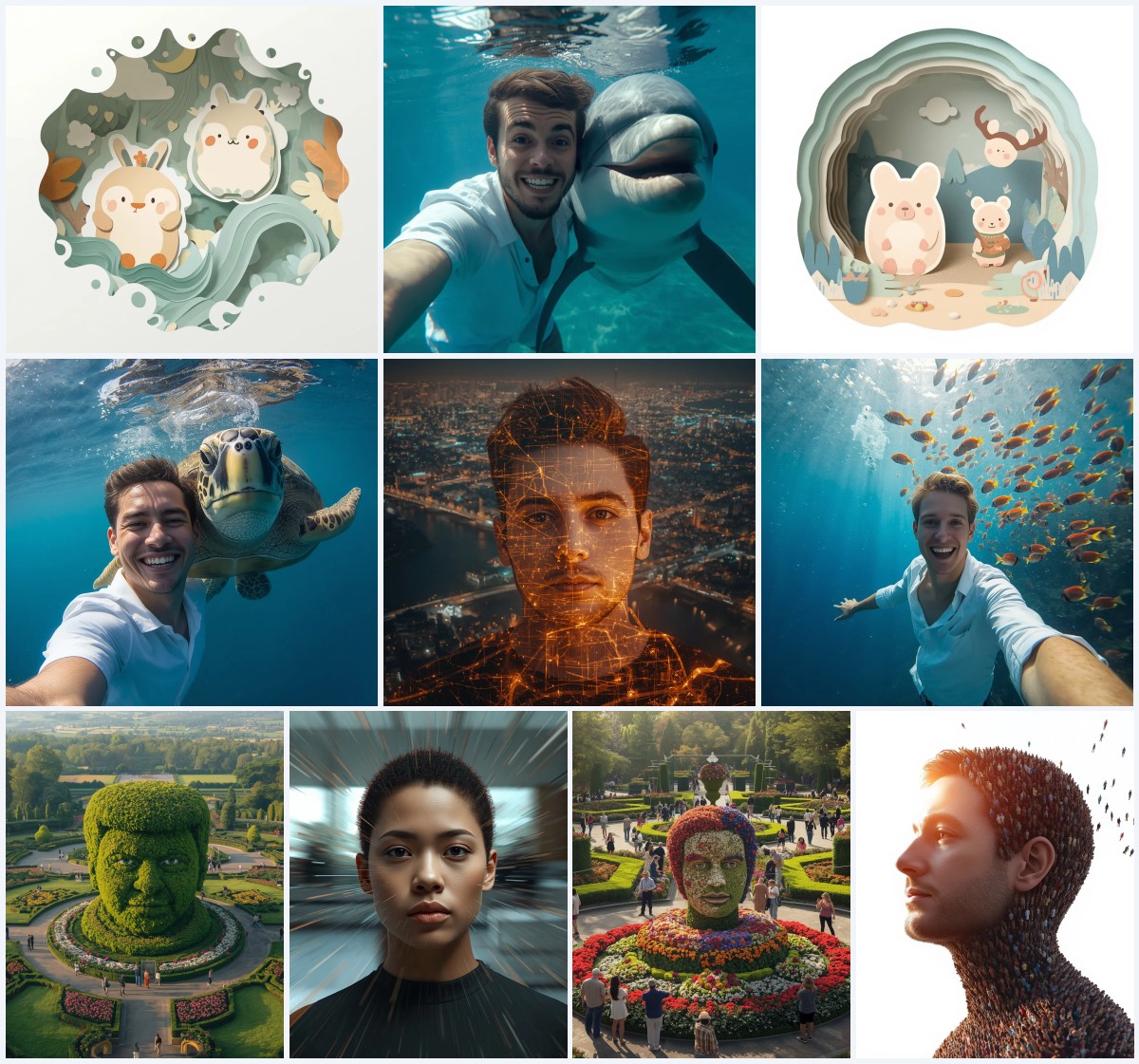


Top 10 AI Prompts for Realistic Underwater Photography Scenes
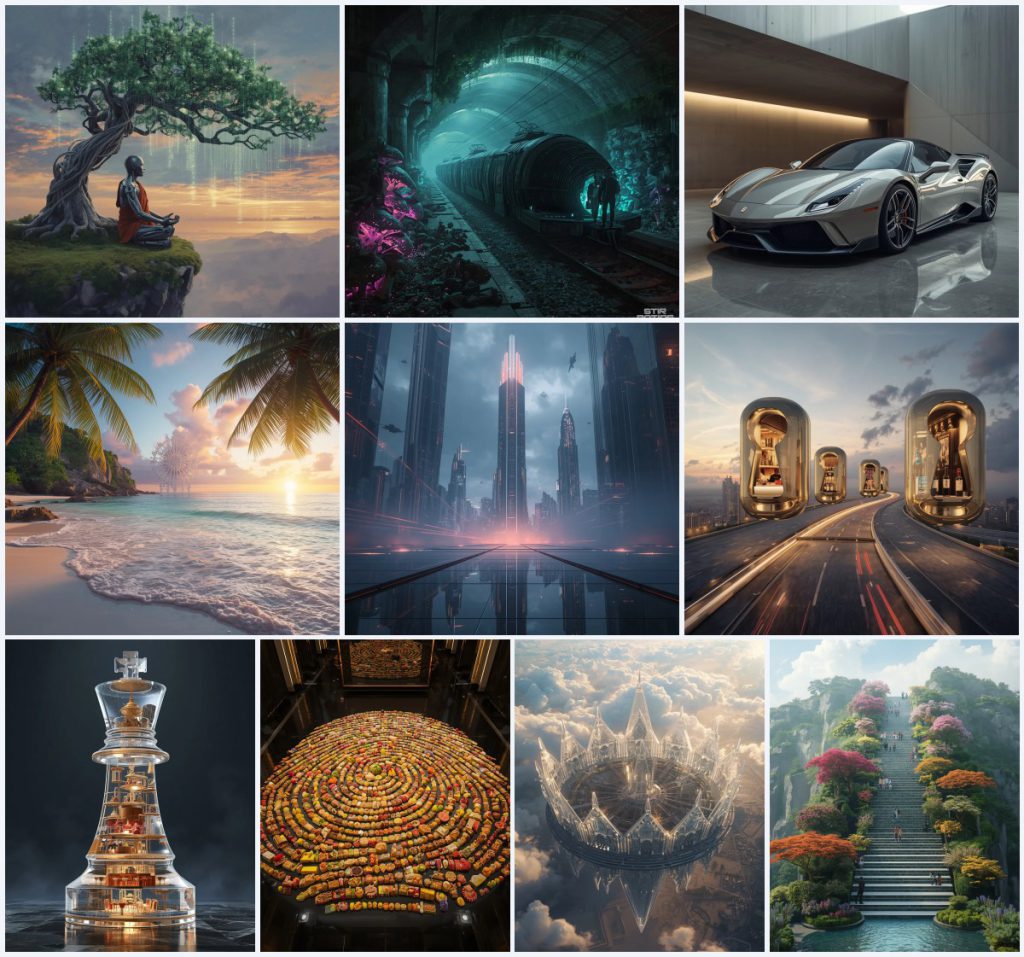
This collection gathers ten separate image prompts under one loose banner: the Top 10 AI Prompts for Realistic Underwater Photography Scenes. The name promises water, but the actual set is stranger and more varied than that label suggests, moving from a cybernetic monk on a mossy cliff to a brutalist subway swallowed by glowing fungi, and from a luxury sports car in a polished concrete hall to a tropical beach at golden hour.
Because this is a collection rather than a single prompt, the article treats the whole set as one shared scene family: high-contrast, cinematic, heavily detailed images where one hero subject sits inside a carefully lit environment. You will find real card titles named below, along with the clauses that do the heavy lifting, so you can pick the card that fits your idea and generate it with confidence.
What this ten-prompt set is actually asking for
Each card in this set is a self-contained visual brief, and together they form a catalogue of dramatic, high-detail scenes rather than a single repeatable shot. The language leans on rendering terms, lighting terms, and scale words, which is why the results tend to look like film stills or premium advertising frames instead of casual snapshots.
- A cybernetic monk with brushed titanium plating, glowing blue energy cores, and a saffron robe, seated on a moss-covered stone cliff edge.
- A futuristic Bodhi tree whose trunk is twisted dark metallic cable and whose canopy is made of translucent holographic data streams and floating emerald-green binary code.
- An abandoned brutalist subway station with raw concrete pillars and rusted steel tracks, lit by giant bioluminescent fungi in toxic cyan, neon purple, and radioactive green.
- A colossal armored caterpillar train with iridescent black chitin pulling into the station, while spores drift like glowing snow.
- A sleek luxury sports car in a low angle shot against polished concrete and glass, described as a hyper realistic RAW photo with HDR quality.
- A tropical sunset beach with turquoise water, white sand, swaying palms, golden hour lighting, and a faint crystalline structure on the horizon.
The shared scene and the clauses that build it
The strongest cards open with an instruction verb that sets the ambition immediately. The monk card begins "Depict a profound, visually striking synthesis of ancient spirituality and advanced cyberpunk technology," and the subway card starts "Visualize a deeply immersive, subterranean biopunk environment." Those two openings tell the model that mood and world-building come before any single object.
The remaining cards work the same way through atmosphere and material. The beach card asks for an "Award Winning Art piece depicting a breathtaking Tropical Background at sunset, infused with a Dreamy Atmosphere," while the city card describes "Towering, sleek Modern Architecture with glowing Neon Lighting" that "reflects in a pristine glass foreground." Read together, the set is really about one lit subject inside one controlled environment, whether that environment is a cliff, a tunnel, a beach, or a showroom floor.
Three style directions inside this set
Three distinct style directions run through the collection, and each one stays inside the wording of its own card rather than borrowing from outside references. Choosing a card is really choosing which of these three you want to render.
- Cyberpunk spirituality: The monk card blends brushed titanium plating and glowing blue energy cores with a simple flowing saffron robe under holographic data streams.
- Biopunk subterranean: The subway card pairs raw concrete pillars and rusted steel tracks with bioluminescent fungi glowing in toxic cyan, neon purple, and radioactive green.
- Luxury commercial realism: The sports car card uses a low angle shot, polished concrete and glass, studio lighting, and HDR quality to sell a premium product feel.
How to run any card from this set
Pick one card, not all ten, and treat it like a shot list. The steps below apply to whichever title you choose, whether that is the crystal chess piece, the fingerprint food installation, or the floating crown metropolis.
- Copy the prompt. Copy the full text of the card you want, including the rendering and lighting clauses, because those words carry most of the visual weight.
- Upload a reference. Add a reference image if your tool accepts one, ideally a photo of the same subject type, such as a car, a beach, or a concrete interior.
- Set the aspect ratio. Choose a wide ratio for landscapes and cityscapes and a squarer ratio for the chess piece, the fingerprint, or the monk, since those are centred compositions.
- Generate the first pass. Run one generation without edits so you can see which clauses the model has ignored before you start adjusting anything.
- Check hands, face, and the main object. Inspect the monk's hands and face, the car's body lines, the caterpillar's segments, and the beach horizon, because these are the areas that break first.
- Refine and rerun. Adjust one clause at a time, then rerun, so you can tell which change actually improved the image.
Using a reference photo well
A reference photo helps most on the cards that imitate real photography, such as the sports car and the tropical beach, and least on the pure fantasy cards like the crystal chess piece. Keep the reference simple and well lit.
- Shoot or choose a reference with even lighting, because the prompts already specify studio lighting, golden hour, or cinematic lighting, and a harsh reference fights those clauses.
- Match the subject type, not the exact subject, so a clean car photo works for the sports car card even if the model and colour differ.
- Avoid cluttered backgrounds in the reference, since every card in this set places its subject against a controlled environment of concrete, glass, water, or sky.
Which tool to use for which card
All four tools below can run these prompts, but they differ in how much realism they deliver and how easily you can steer them. Match the tool to the card rather than using one tool for everything.
| Tool | Access | Typical realism | Useful here for |
|---|---|---|---|
| ChatGPT | Free and paid tiers | Moderate to high | Rewriting a card into a shorter brief, such as trimming the monk prompt down to its saffron robe and titanium plating. |
| Google Gemini | Free and paid tiers | Moderate to high | Handling long, layered prompts like the brutalist subway card with its concrete pillars, fungi, and caterpillar train. |
| Leonardo AI | Free credits and paid plans | High | Iterating quickly on the sports car card, where the low angle shot and HDR quality need several passes. |
| Midjourney | Paid subscription | Very high | Rendering the tropical beach card, where golden hour lighting and turquoise water benefit from its colour handling. |
Practical tips for sharper results
Small wording changes move these images a long way, because each card is dense with material and lighting detail. The tips below point at real objects and surfaces named in the prompts.
- Keep the saffron robe clause when running the monk card, because the plain fabric against brushed titanium plating is what makes the contrast read.
- Keep the iridescent black chitin on the caterpillar train, since that surface is what separates the train from the glowing fungi behind it.
- Keep the polished concrete and glass background on the sports car card, because a busy background destroys the clean low angle shot.
Common failures and what to change
These prompts are ambitious, so failures are predictable and usually traceable to one overloaded clause. Fix one thing at a time.
| Issue | What to change |
|---|---|
| The monk's hands merge into the titanium plating | Simplify the pose clause and describe the hands as resting and separate from the body panels. |
| The fungi overwhelm the subway station | Reduce the number of glowing colours and keep the concrete pillars as the dominant structure. |
| The sports car looks like a toy | Strengthen the low angle shot wording and remove any clause that shortens the car's proportions. |
| The beach horizon shows a broken crystalline structure | Remove or soften the crystalline element and let the golden hour sky carry the background. |
Frequently Asked Questions
Can I combine two cards from this set into one image?
You can, but the results get muddy fast, because each card already carries its own lighting and material logic. A monk under holographic data streams and a bioluminescent subway fight for the same visual space, so pick one and push it hard instead.
Why does the collection mention underwater photography when most cards are not underwater?
The set title is broader than the individual cards, which range from a cliff edge to a subway tunnel to a beach. Treat the title as a category label and the card text as the real instruction.
Which card is easiest for a first attempt?
The tropical beach card and the sports car card are the most forgiving, because their clauses describe familiar lighting and surfaces. The monk and subway cards demand more detail from the model and usually need a second pass.
Conclusion
This set rewards patience more than speed. Each card is dense with material, lighting, and scale language, so the first generation is really a diagnostic pass that shows you which clause the model has dropped. Work through one card at a time, keep the clauses that carry the contrast, and rerun after each single change. The results will look like the cinematic frames the prompts are clearly reaching for.
Edit and remix only photos you have the right to edit, and respect the licence attached to every reference image you upload.