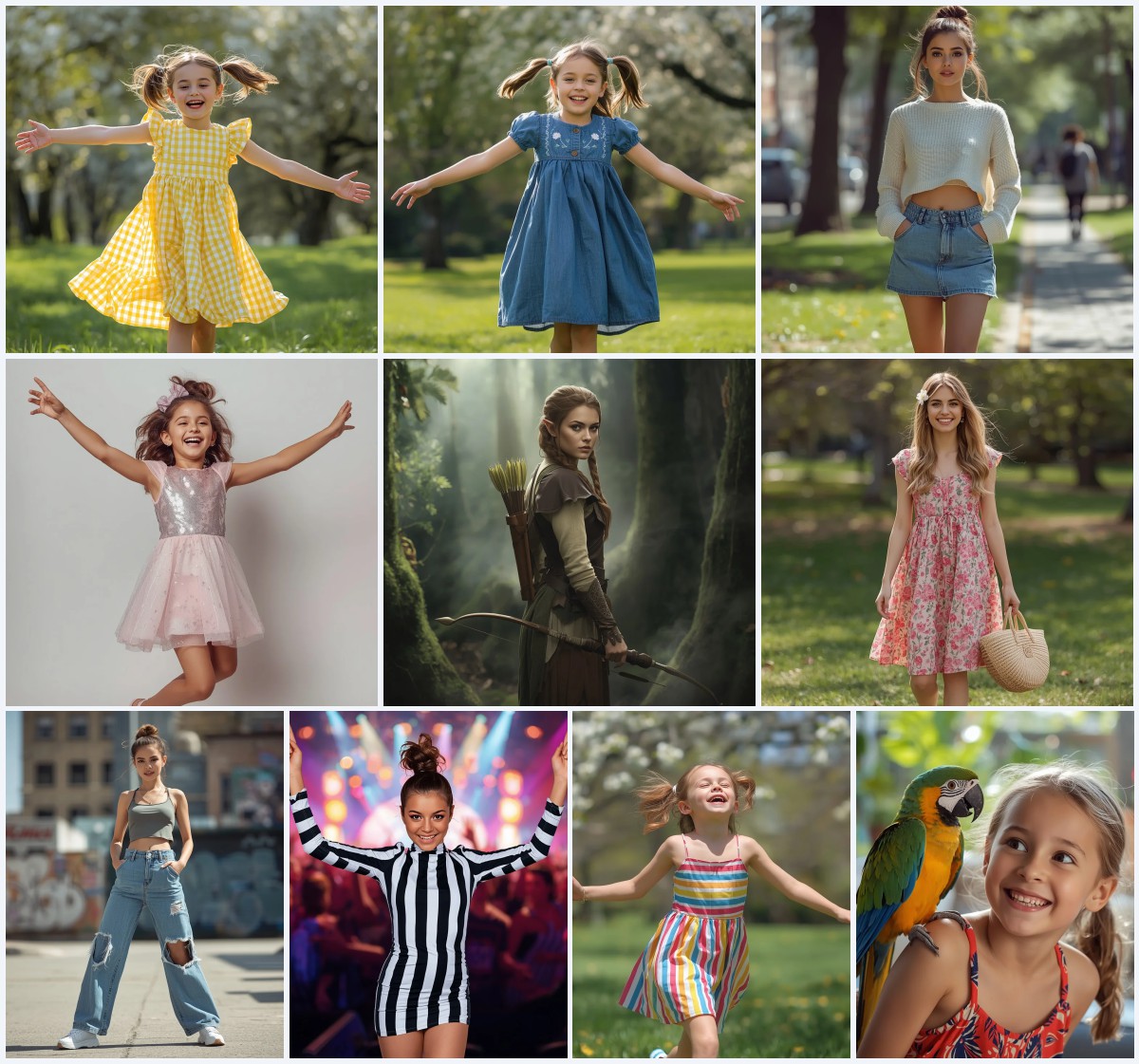


Top 10 AI Prompts for Women’s Innovative Fashion Collection Design
Fashion image prompts work best when the outfit, the location, and the light all agree with each other. This collection gathers ten separate prompt ideas for women's fashion, and each one describes a full look rather than a single garment floating in empty space. Some of the prompts ask for a reference photo of a face, while others describe a complete scene from scratch.
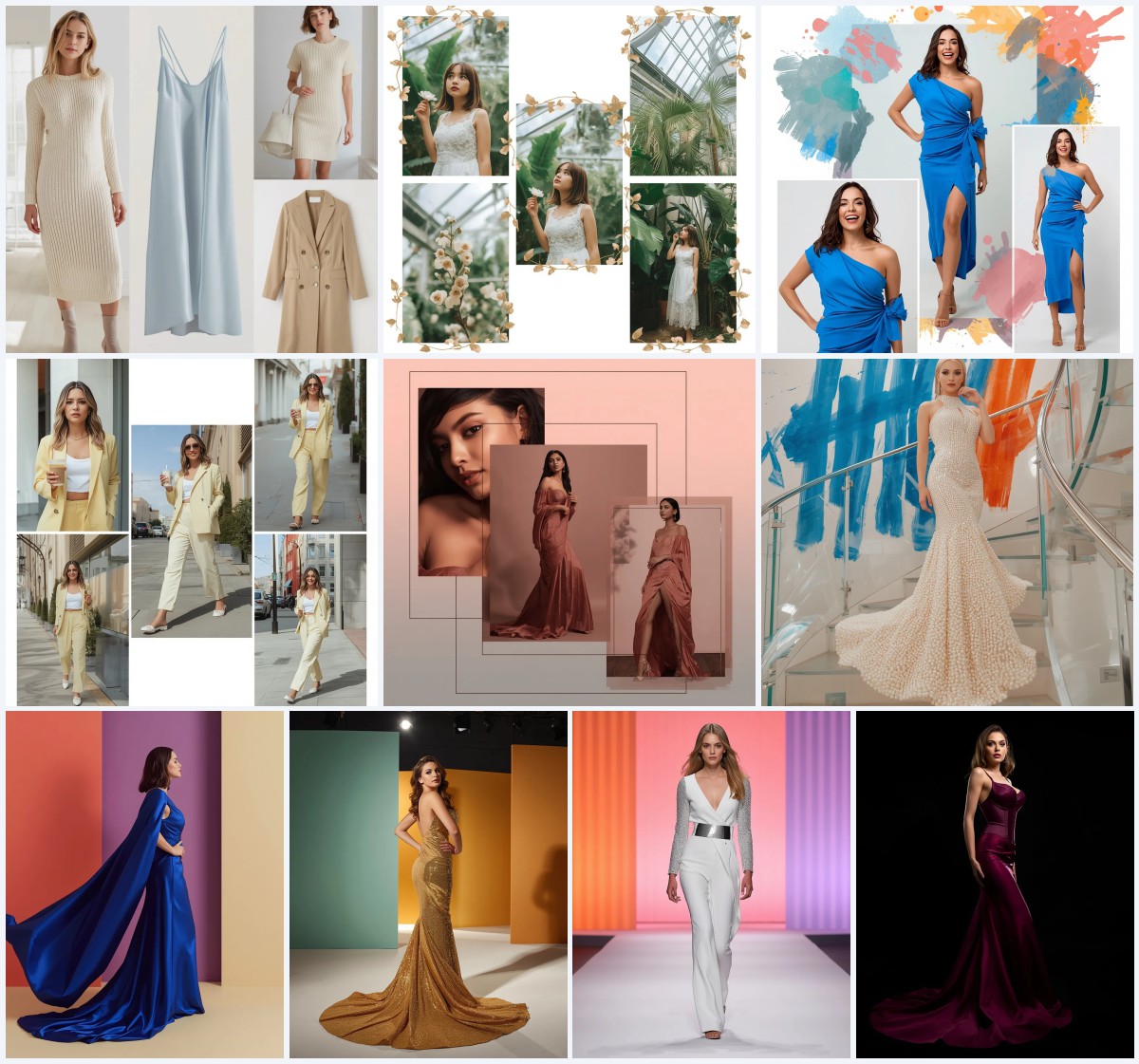
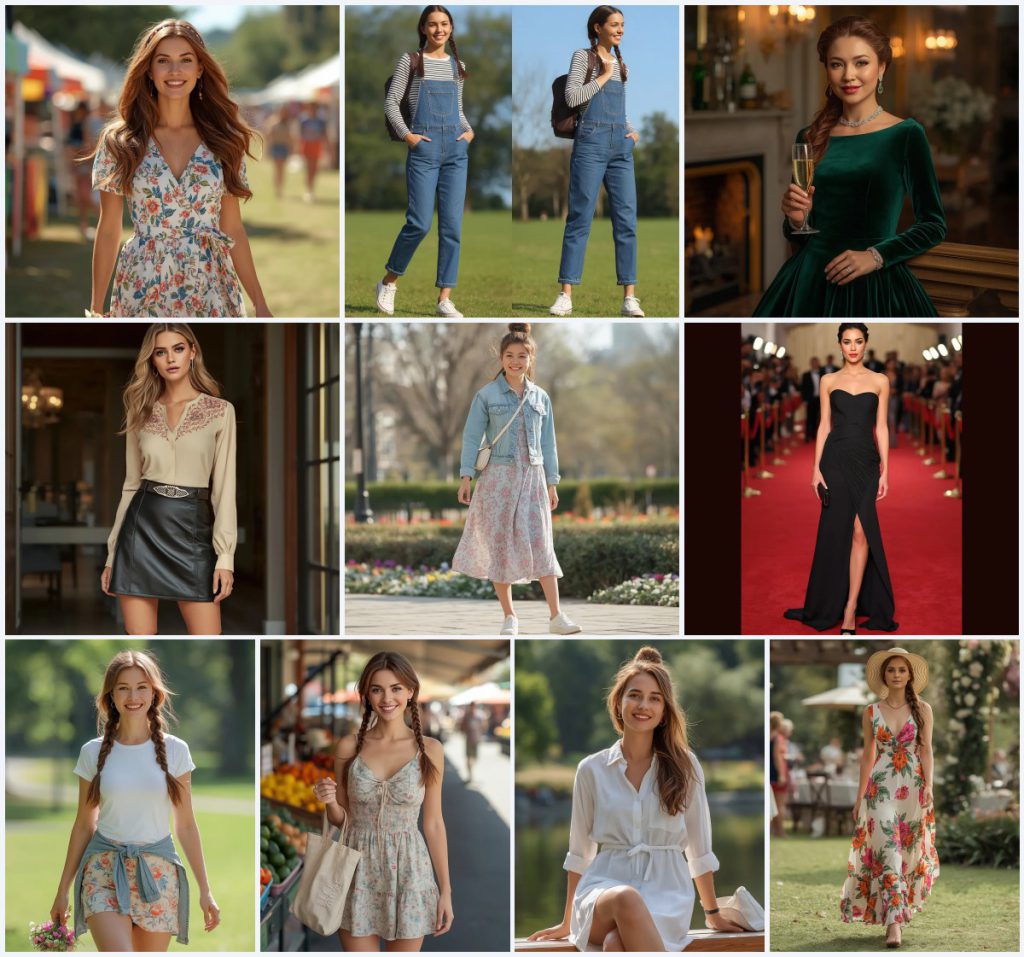
This article walks through the shared logic of the set, then breaks down the scene details, the style options, the upload steps, and the tool choices that fit these prompts. Several real card titles appear below, including Playful Floral Wrap Dress: A Sunny Countryside Festival, Regal Emerald Green Velvet Gown: A Grand Winter Ball, and Western Chic: Denim Overalls with a Striped Tee. The goal is simple: help you get a clean, believable fashion image on the first or second try.
What this fashion collection prompt set is asking for
The set is built around full-body or three-quarter views of a woman wearing a described outfit in a described place. Each prompt fixes the clothing, the hair, the accessories, the setting, and the mood, so the model has very little room to invent. That tightness is what makes the results consistent across repeated generations.
- A named outfit, such as a knee-length floral wrap dress in light cotton or a floor-length emerald green velvet gown
- A stated location, from a sunny countryside festival to a grand ballroom with a fireplace
- Hair and styling details, including loose playful waves, a messy bun, or a grand braided updo
- Accessories that match the outfit, like gold stud earrings, espadrille sandals, or diamond and emerald jewelry
- A facial reference instruction in the reference-based prompts, preserving identity, structure, skin tone, and age
- Technical tags such as high-resolution, photorealistic, and 8k to push toward a photographic look
How the scenes and outfits are framed
The reference-based prompts open with a strict instruction: "using the uploaded reference image strictly as the ONLY face reference, preserving her exact facial identity, facial structure, skin tone, and age." That line does most of the identity work, so the rest of the prompt can focus on wardrobe and environment. The same group then places the woman in motion, for example "casually strolling through a sunny countryside festival" or "casually browsing fresh produce at a vibrant farmers market on a sunny day."
The non-reference prompts lean on atmosphere instead. One asks for a woman "standing gracefully by a grand fireplace in a lavish ballroom, holding a glass of champagne," while another wants "a vibrant city park with blooming flowers and soft natural light." In every case the background is described with enough specificity that the model can build depth, color, and light without guessing.
Why this set works for fashion visuals
First, each prompt separates wardrobe from environment, which keeps the outfit readable even when the background is busy. Second, the reference-face instruction protects identity across a whole series, so ten images can look like the same person in ten different looks. Third, the mix of casual and formal scenes gives you a usable range for lookbooks, mood boards, and social posts without rewriting the core structure each time.
- Wardrobe and setting are described separately, so the outfit stays the visual focus
- The reference-face clause keeps one identity consistent across many generated looks
- Casual and formal scenes are both covered, which suits lookbooks, mood boards, and social content
Three style directions inside this set
There are three clear style directions running through this collection, and each one stays inside the wording of its own prompt. Picking one direction per image keeps the output coherent instead of mixing a ballroom gown with a farmers market.
- Sunny casual realism: The floral wrap dress, denim overalls, and floral mini dress prompts all ask for natural light, relaxed poses, and photorealistic 8k detail.
- Opulent cinematic glamour: The emerald velvet gown prompt requests an opulent cinematic photograph with warm ambient lighting from the fireplace and a grand braided updo.
- Rustic western chic: The leather skirt prompt specifies a tailored black leather A-line mini skirt with subtle stud detailing and a rustic-chic interior.
How to run these prompts step by step
Work through the list below in order, because the upload step changes how much freedom the model has with the face. If you skip the upload on a reference-based prompt, the model will invent a face and the identity clause becomes meaningless.
- Copy the prompt. Copy the full text of the card you want, including the technical tags at the end, since those tags control the final sharpness.
- Upload a reference image. For any prompt that mentions an uploaded reference, attach a clear, well-lit portrait before generating.
- Check the face match. Compare the generated face to your reference for structure, skin tone, and apparent age before judging the outfit.
- Inspect hands and limbs. Look closely at fingers, wrists, and any hand holding an object such as a bunch of fresh flowers or a glass of champagne.
- Verify the main object. Confirm the dress or outfit matches the description, including sleeve length, hemline, and fabric like light cotton or velvet.
- Adjust one variable. If something is off, change a single element such as lighting or pose, then regenerate instead of rewriting the whole prompt.
Choosing the reference photo
The reference image does the heaviest lifting in the identity-based prompts, so the quality of that file decides the quality of the match. A clean, front-facing photo with even light gives the model the most to work with.
- Use a front-facing portrait with even, soft lighting and no heavy shadows across the face
- Avoid sunglasses, hats, or hands covering the face, since these hide the features the prompt needs to preserve
- Pick a neutral expression and a plain background so the model reads the face rather than the surroundings
Which tools handle these prompts well
Different platforms treat reference images and long descriptive prompts differently, so the same card can behave quite differently across tools. The table below notes realistic expectations and one concrete detail from this set for each tool.
| Tool | Access | Typical realism | Useful here for |
|---|---|---|---|
| ChatGPT | Free and paid tiers | Good to very good | Rewriting the floral wrap dress prompt into a shorter version while keeping the light cotton and espadrille sandals details |
| Google Gemini | Free and paid tiers | Good to very good | Describing the lavish ballroom scene and the emerald velvet gown before you generate |
| Leonardo AI | Free credits, paid plans | Very good | Running several variations of the denim overalls prompt with the two playful braids kept consistent |
| Midjourney | Paid subscription | Excellent | High-detail output for the red carpet gown with sharp pleats and the dramatic high-low hemline |
Practical tips for cleaner results
Small wording choices change the output more than most people expect. The three notes below reference real items from this collection so you can test them directly.
- Name the fabric, because light cotton behaves differently from velvet in how the model renders folds and sheen
- Keep the accessory list short, since gold stud earrings and a simple crossbody bag read clearly while a long list becomes noise
- Match the light to the location, so a fireplace calls for warm ambient light while a farmers market calls for bright natural daylight
Common problems and what to change
Most failures in this set come from a small number of recurring causes, and each one has a direct fix in the prompt text.
| Issue | What to change |
|---|---|
| Face does not match the reference | Re-upload a sharper, front-facing portrait and repeat the identity clause at the start of the prompt |
| Outfit drifts from the description | Restate the exact garment, such as the knee-length floral wrap dress with short sleeves and a gathered skirt |
| Background overwhelms the subject | Shorten the location description and keep one anchor detail, like the tranquil lake or the rustic-chic interior |
| Hands or held objects look wrong | Remove the held item, or specify a simple pose such as both hands resting at her sides |
Frequently Asked Questions
Do I need to upload a reference photo for every prompt in this set?
No. Only the prompts that explicitly mention an uploaded reference image require one. The denim overalls, leather skirt, red carpet gown, and floral maxi dress prompts describe the subject without asking for a face reference.
Can I use the same reference photo across all ten prompts?
Yes, and that is the main advantage of this collection. One clear portrait can carry through the floral wrap dress, the emerald velvet gown, and the farmers market mini dress, keeping the same person recognizable in each scene.
Why do the prompts end with tags like photorealistic and 8k?
Those tags push the model toward a photographic finish rather than an illustration look. Removing them usually softens detail in fabric texture and skin, which matters for light cotton and velvet alike.
Conclusion
This collection works because each prompt commits to one outfit, one place, and one mood, then lets the model fill in the rest. Start with a single card, upload a clean reference if the prompt asks for one, and check the face, hands, and main garment before moving to the next look. Once the first image lands, the remaining nine are mostly a matter of swapping the wardrobe and location lines while keeping the structure intact.
Only edit and upload a photo you own or otherwise have the right to edit.