

Best 10 Beautiful Girl’s AI Prompts for Aesthetic Fashion Photography with Vintage Appeal
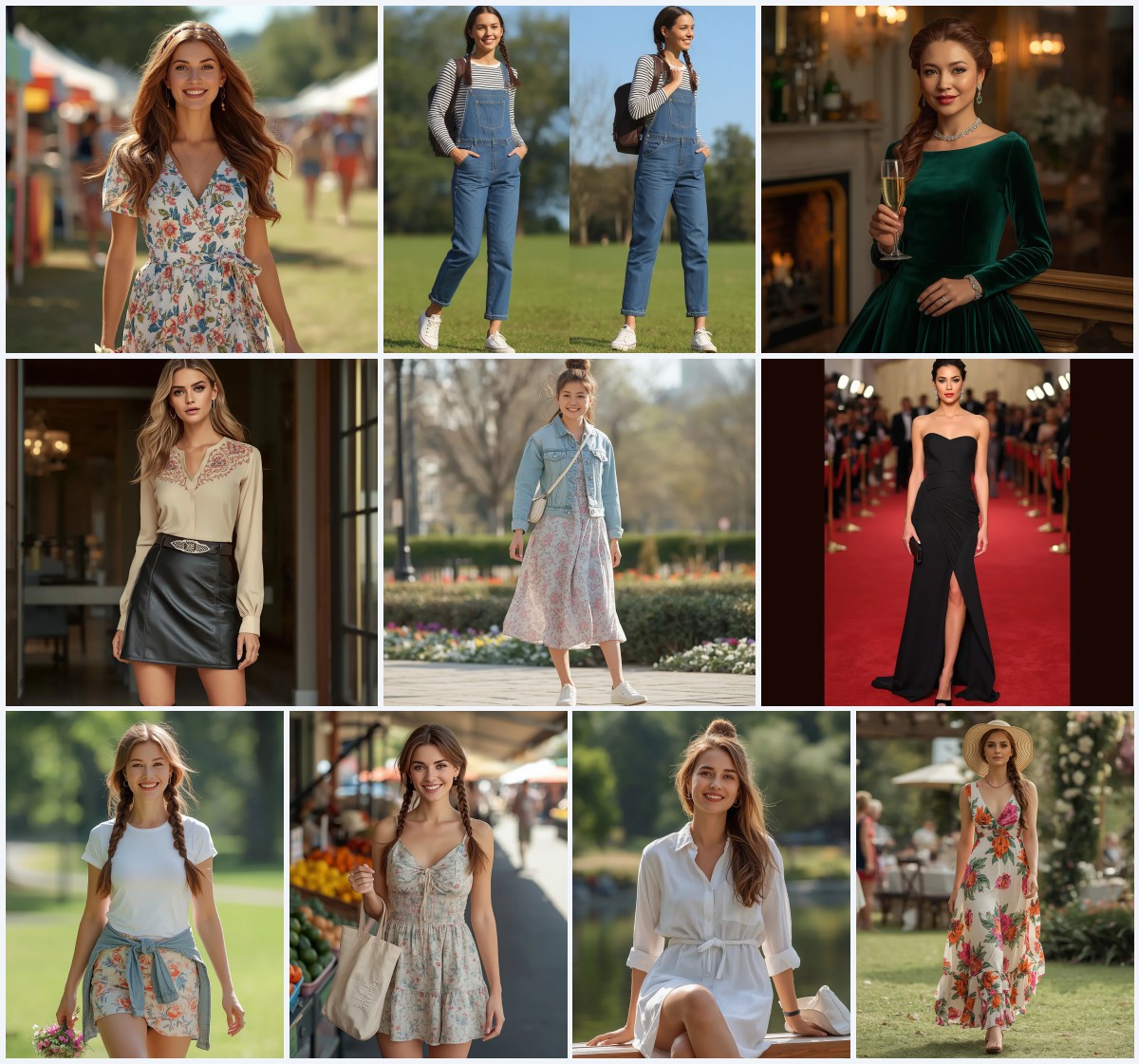
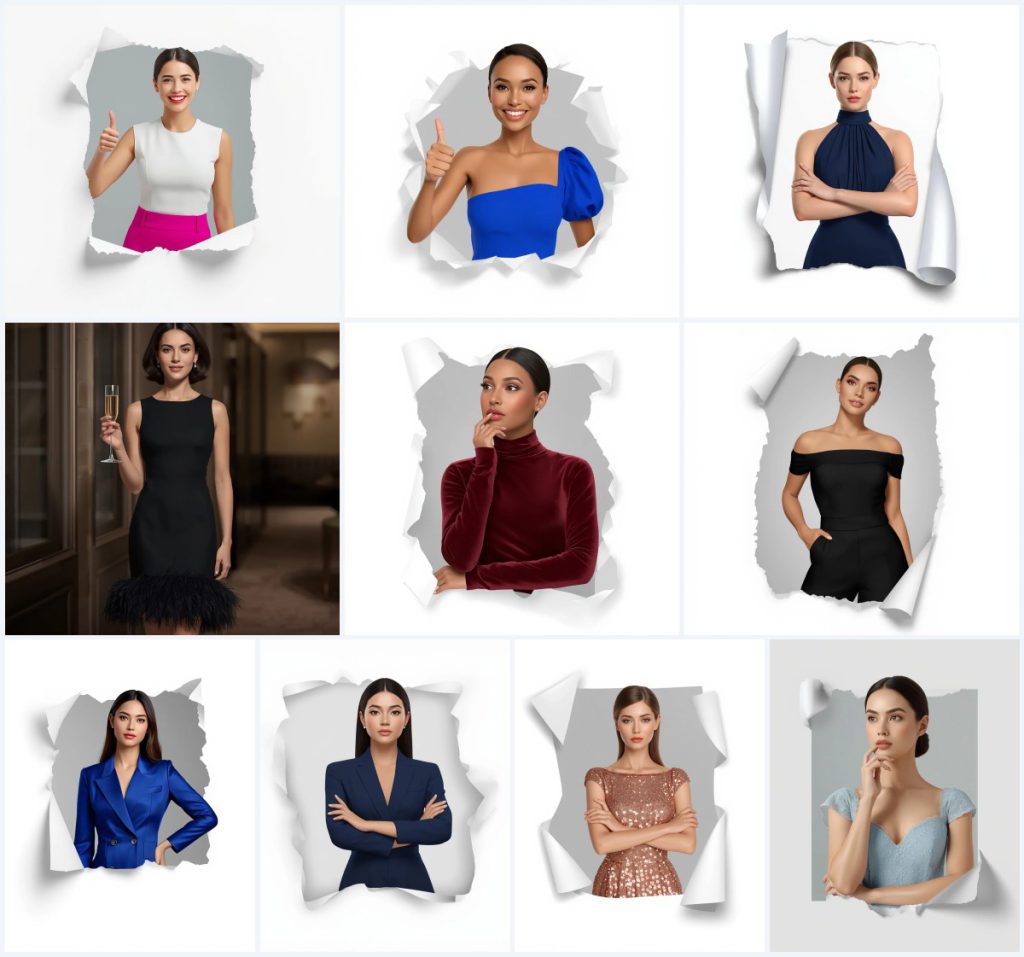
This collection gathers ten separate AI image prompts that share one visual idea: a beautiful woman emerging through a torn paper hole in a clean studio setting. The ten titles range from A Cheerful Woman Giving Thumbs-Up in a Vibrant Hot Pink Mini Skirt to A Thoughtful Woman in a Delicate Baby Blue Lace Mini Dress, and they also include a Calm Woman with Arms Crossed in an Elegant Navy Blue Gown, a Cool and Stylish Woman in a Sleek Black Off-Shoulder Jumpsuit, and a Cool and Stylish Woman in a Modern Royal Blue Tuxedo Dress. Other card titles in the set include A Cheerful Woman Giving Thumbs-Up in a Vibrant Cobalt Blue Dress, A Thoughtful Woman in a Luxurious Burgundy Velvet Midi Dress, A Calm Woman with Arms Crossed in a Chic Navy Blue Jumpsuit, and A Calm Woman with Arms Crossed in a Dazzling Rose Gold Gown.
The shared scene is a polished 3D-looking portrait where ripped paper edges wrap around a half-body figure, with only the chest-up visible inside a 4:5 vertical frame. Each prompt keeps the same lighting and background rules, then changes the outfit, pose, and mood. One card, Elegant Black Cocktail Dress with Feather Hem for a Sophisticated Party, shifts into a softly lit upscale lounge with a champagne glass and an 85mm lens, so the set mixes one realistic party portrait with nine torn-paper studio renders. This article explains what the prompts contain, how to use them, and how to fix common failures.
What this aesthetic fashion prompt collection is asking for
Every prompt in this set asks for an ultra-clean, high-resolution, sharp, polished 3D render of a beautiful woman, and most of them repeat the instruction that her facial identity and features stay identical across all frames. The main visual hook is a torn paper hole with realistic ripped edges that wrap naturally around her half-body, creating a 3D popping-out effect. The frame is vertical at 4:5, the lighting is soft studio lighting with no harsh shadows, and the background is a single cool, crisp pure white without gradient or color shift. The collection then varies the clothing and pose: a vibrant hot pink mini skirt with a thumbs-up, a cobalt blue dress, an elegant navy blue gown with arms crossed, a black off-shoulder jumpsuit, a royal blue tuxedo dress, a burgundy velvet midi dress, a chic navy blue jumpsuit, a dazzling rose gold gown, and a delicate baby blue lace mini dress. The tenth prompt leaves the paper-hole setup and places an elegant woman in a black cocktail dress with a feather hem in a softly lit upscale lounge.
- A torn paper hole with realistic ripped edges around a half-body figure
- A 3D popping-out effect against a subtle light grey gradient inside the paper hole
- A 4:5 vertical frame showing only the chest-up portion of the woman
- Soft studio lighting with even, clean illumination and no harsh shadows
- A cool, crisp pure white background locked without gradient or color shift
- Outfit swaps such as a hot pink mini skirt, navy blue gown, royal blue tuxedo dress, and baby blue lace mini dress
The studio scene and the torn-paper illusion
The scene is built around a simple but strong contrast: a pure white field with a paper hole cut into it, and a polished figure pushing through that hole. The prompt states that "the avatar appears to emerge through a torn paper hole, with realistic, ripped edges wrapping naturally around her half-body," which is what sells the depth. Inside the hole, there is a "subtle light grey gradient" that separates the opening from the white background, and the paper edges catch the studio light so they look like real torn fibers rather than a flat cutout. The woman is framed so that "only her chest-up is visible" within a 4:5 vertical aspect ratio, which keeps the composition tight and editorial.
The lighting and background are deliberately controlled. The prompt asks for "soft studio lighting, even and clean, casting no harsh shadows and providing smooth highlights," so the face stays readable and the outfit colors stay saturated. The background is described as "a single cool, crisp pure white, locked without gradient or color shift," which prevents the AI from adding random color washes behind the paper. In the party card, the scene changes to a "softly lit, upscale lounge with minimalist decor," and the woman holds "a slender glass of champagne" while wearing a fitted black cocktail dress with a feather hem. That single card keeps the same polished realism but trades the torn-paper trick for a real interior with an 85mm lens and shallow depth of field.
Why this torn-paper portrait idea works
The concept works because it gives a familiar portrait format a physical gimmick that reads instantly on a phone screen. A viewer sees the ripped paper edge and understands the depth before reading any caption, which makes the image stop the scroll. The strict studio setup also makes the woman the only subject, so the outfit and expression carry the whole message. Finally, the repeated identity instruction helps the set feel like one campaign rather than ten unrelated pictures, which matters when you want a consistent feed or a small brand look.
- The torn paper edge creates an immediate 3D illusion that stands out in a crowded feed.
- The clean white background and soft studio lighting keep attention on the woman and her outfit.
- The repeated identity and framing rules make the ten prompts feel like one coherent visual series.
Three style directions inside this collection
This collection supports three clear style directions, and each one stays inside the prompt's own rules. You are not choosing between five different aesthetics here; you are choosing how to lean the same torn-paper studio render toward a mood. The first style is polished 3D portrait, the second is clean editorial studio, and the third is upscale lounge realism, which comes from the party card with the black cocktail dress and champagne glass.
styles
Array
How to run these prompts step by step
The workflow is the same for all ten cards, but the party card needs one extra check because it has a real interior background. Start by choosing the card that matches your outfit or mood, then paste only that card's prompt into your image tool. If you are using a reference photo, upload it before you generate so the model can hold the face. Generate a few variations, then inspect the hands, the face, and the main object before you accept a result. The steps below keep the process repeatable.
- Copy the prompt. Copy the full text of the card you want, including the 4:5 vertical aspect ratio and the background rules.
- Upload a reference. Upload a clear, well-lit photo of the person if you want the facial identity to stay close to a real face.
- Generate the image. Run the prompt and produce at least four variations so you can compare the torn paper edges and the outfit.
- Check the hands. Look at the thumbs-up card especially, because fingers and thumb shapes are where AI models fail most often.
- Check the face. Confirm that the expression matches the card, such as the radiant smile, the calm arms-crossed pose, or the pensive look.
- Check the main object. Inspect the torn paper hole and, for the party card, the champagne glass and the feather hem on the black cocktail dress.
Choosing the reference photo
The reference photo decides how much of the prompt's identity language actually lands. Because the prompt asks for identical facial identity and features across all frames, you want a source image that is sharp, evenly lit, and free of heavy filters. A plain background helps the model separate the face from the source scene, and a neutral expression gives the generator room to apply the smile or the calm pose from the card.
- Use a sharp, front-facing photo with even lighting and no strong shadows across the face.
- Avoid heavy beauty filters, because they flatten skin texture and confuse the identity instruction.
- Keep the background simple, since the prompt will replace it with pure white or the upscale lounge.
Which tools handle this prompt best
Different tools handle the torn-paper illusion and the outfit detail with different levels of realism. ChatGPT is useful for editing an existing photo, Google Gemini is strong on clean studio lighting, Leonardo AI gives good control over the 3D render look, and Midjourney produces the most polished editorial finish. The table below matches each tool to a real detail from this prompt, such as the ripped edges or the feather hem.
| Tool | Access | Typical realism | Useful here for |
|---|---|---|---|
| ChatGPT | Free and paid tiers | Medium to high | Editing an uploaded portrait so the face stays consistent while the torn paper hole is added. |
| Google Gemini | Free and paid tiers | Medium to high | Handling the soft studio lighting and the pure white background without color shift. |
| Leonardo AI | Free credits and paid plans | High | Producing the polished 3D render look and the subtle light grey gradient inside the paper hole. |
| Midjourney | Paid subscription | Very high | Delivering the most editorial finish for the black cocktail dress with the feather hem and the champagne glass. |
Tips that use the real objects in these prompts
Small adjustments to the wording can fix most problems before you regenerate. Keep the paper hole, the outfit, and the lighting as separate concerns so you can change one without breaking the others. The tips below name real elements from the collection, including the torn paper, the mini skirt, and the champagne glass.
- If the torn paper looks like a clean cut, add words like frayed fibers and uneven ripped edges to the prompt.
- If the hot pink mini skirt or the baby blue lace mini dress loses its color, repeat the exact color name and ask for saturated fabric.
- If the champagne glass in the party card looks warped, describe it as a slender stemmed glass and check the hand holding it.
Common problems and what to change
Most failures in this set come from the paper edge, the hands, or the background. The prompt is strict about the white background and the soft studio lighting, so any drift there is easy to spot. Use the table to match the failure to the fix.
| Issue | What to change |
|---|---|
| The torn paper edge looks flat or painted on | Add realistic ripped edges and visible paper fibers, and keep the subtle light grey gradient inside the hole. |
| The background picks up a color tint | Repeat the pure white background instruction and remove any words that suggest a colored backdrop. |
| The thumbs-up hand has extra or bent fingers | Regenerate, or crop tighter on the chest-up frame so the hand is less prominent. |
| The face changes between variations | Upload a clear reference photo and keep the identical facial identity and features wording in the prompt. |
Frequently Asked Questions
Can I use these prompts for a consistent Instagram feed?
Yes. The set is built for consistency because most cards repeat the same torn paper hole, the same 4:5 vertical frame, and the same identity instruction. If you keep the outfit swaps within one color family, the ten images will look like a single campaign.
Why does the prompt ask for only the chest-up portion?
The chest-up crop keeps the composition tight and makes the torn paper edge the main visual event. It also reduces the chance of errors in the lower body, which is where AI models often produce strange proportions.
Is the black cocktail dress card different from the other nine?
Yes. That card leaves the torn paper setup and places the woman in a softly lit upscale lounge with a champagne glass, a polished bob, and diamond stud earrings. It keeps the polished realism but uses an 85mm lens and shallow depth of field instead of the pure white studio background.
Conclusion
This collection is a practical set for anyone who wants a clean, scroll-stopping portrait look without building a complex scene. The torn paper hole does the heavy lifting, while the outfit swaps let you run a series across a hot pink mini skirt, a navy blue gown, a royal blue tuxedo dress, or a baby blue lace mini dress. Keep the background white, keep the lighting soft, and check the hands and the paper edges before you post. If you want a single realistic break from the studio, the black cocktail dress card with the champagne glass is the one to try next.
Only edit a photo you have the right to edit, and keep a copy of the original in case you want to compare the torn paper edge against the source.